

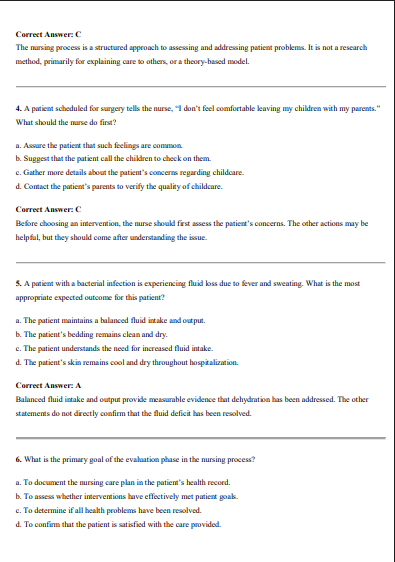
Ask any nurse who has been through a med-surg course and they’ll tell you the hardest part isn’t memorizing what a disease is. It’s figuring out, in the middle of a busy patient scenario with five things happening at once, which piece of information actually matters right now. That’s the skill this course is really testing, and it’s the skill most students haven’t had enough practice with by the time exam day arrives.
This resource was developed around the 12th edition of Lewis’s Medical-Surgical Nursing, one of the standard texts used across adult health nursing courses. It takes the same body-systems organization the book uses and turns it into a working set of practice questions, so studying feels less like re-reading and more like rehearsing for the actual exam.
How This Question Bank Is Built
Every item here was written with one goal: get you doing the kind of thinking an exam will actually ask for, instead of just reciting facts back. That means a heavy focus on:
- Recognizing which assessment finding is most urgent in a given patient picture
- Understanding the physiology behind why a symptom happens, not just that it happens
- Choosing the right nursing action first, when several reasonable options are listed
- Interpreting lab values and vital signs in context, not in isolation
You’ll find a mix of formats:
- Standard four-option multiple choice
- Select-all-that-apply items
- True/false items aimed at commonly confused concepts
- Fill-in-the-blank for terminology and normal reference ranges
- Short patient-scenario questions requiring a judgment call
Each item is tagged to its relevant body system and chapter, so if you know you’re weak on renal content or endocrine content, you can go straight there instead of working through material you’ve already got a handle on.
Body Systems and Units Covered
- Core concepts: nursing process, patient safety, and professional practice in adult health
- Fluid, electrolyte, and acid-base regulation
- Perioperative care, from pre-op through recovery
- Cardiac and vascular conditions
- Pulmonary conditions
- Blood disorders and immune-related conditions
- Digestive and liver/biliary conditions
- Hormonal and metabolic conditions, including diabetes
- Kidney and urinary tract conditions
- Bone, joint, and neurologic conditions
- Skin conditions and reproductive health
- Cancer care
- Critical, emergency, and disaster response nursing
Why Practice Questions Beat Re-Reading
Here’s the honest truth about how most students study for med-surg: they reread the chapter, feel like they understand it, and then get surprised on the exam. The problem is that recognizing information on a page and pulling that same information out of your head under pressure are two completely different skills. Practice questions train the second skill. Getting a question wrong and reading through why tells you exactly where the gap is, while you still have time to fix it.
If you’re teaching this course rather than taking it, the same logic applies from the instructor side. Writing a full bank of original, well-reasoned questions from scratch eats up hours you’d rather spend elsewhere. Starting from an existing, organized set and adjusting it to fit your syllabus is a faster path to a solid exam.
Format
Delivered as an editable file, so you can drop items into an LMS, print a paper quiz, or pull a handful of questions together for a quick review session. Every question comes with the correct answer identified and a written explanation of the reasoning behind it.
Five Sample Questions
Question 1
A patient with a fractured femur suddenly develops confusion, tachypnea, and petechiae across the chest and neck 24 hours after the injury. What complication should the nurse suspect?
A. Deep vein thrombosis
B. Fat embolism syndrome
C. Compartment syndrome
D. Malunion of the fracture
Correct Answer: B. Fat embolism syndrome
Rationale: Fat embolism syndrome typically develops within 12 to 48 hours after a long bone fracture, when fat globules from the bone marrow enter the bloodstream and travel to the lungs, brain, and skin. The classic triad of confusion, respiratory distress, and petechiae fits this presentation closely. Deep vein thrombosis usually develops more gradually and doesn’t produce petechiae, compartment syndrome presents with localized limb pain and pressure rather than systemic neurologic and respiratory symptoms, and malunion is a long-term healing complication, not an acute one.
Question 2
A patient with COPD has an arterial blood gas showing a pH of 7.32, PaCO2 of 58 mmHg, and HCO3 of 30 mEq/L. How should the nurse interpret these values?
A. Uncompensated respiratory acidosis
B. Partially compensated respiratory acidosis
C. Metabolic alkalosis
D. Fully compensated respiratory alkalosis
Correct Answer: B. Partially compensated respiratory acidosis
Rationale: The low pH confirms acidosis, and the elevated PaCO2 identifies a respiratory cause, consistent with the chronic CO2 retention seen in COPD. The elevated bicarbonate shows the kidneys are retaining base to buffer the acidosis, but the pH hasn’t returned to normal range, which means compensation is only partial. If compensation were complete, the pH would fall within normal limits despite the abnormal PaCO2 and HCO3.
Question 3
A patient recovering from a thyroidectomy reports tingling around the mouth and in the fingertips, and the nurse notices facial muscle twitching when tapping near the ear. What should the nurse do first?
A. Reassure the patient this is a normal, expected finding after surgery
B. Check the patient’s calcium level and notify the provider
C. Apply a warm compress to the surgical site
D. Encourage the patient to increase oral fluid intake
Correct Answer: B. Check the patient’s calcium level and notify the provider
Rationale: Perioral tingling combined with a positive Chvostek’s sign strongly suggests hypocalcemia, a known risk after thyroidectomy if the parathyroid glands are disrupted or removed during surgery. This is not a normal postoperative finding and needs to be reported and addressed, since untreated hypocalcemia can progress to tetany and airway compromise. A warm compress or increased fluids won’t correct a calcium imbalance.
Question 4
A patient with cirrhosis develops increasing abdominal girth, shortness of breath, and confusion. Which action is the priority?
A. Restrict the patient’s protein intake to zero
B. Assess for asterixis and check the patient’s ammonia level
C. Encourage ambulation to reduce abdominal swelling
D. Administer a stimulant laxative immediately without further assessment
Correct Answer: B. Assess for asterixis and check the patient’s ammonia level
Rationale: Confusion in a patient with cirrhosis raises concern for hepatic encephalopathy, caused by the liver’s reduced ability to clear ammonia from the blood. Asterixis, a flapping tremor of the hands, is a classic physical finding, and checking ammonia levels helps confirm the suspicion. Protein is typically moderated rather than eliminated entirely, ambulation doesn’t address the underlying metabolic problem, and while lactulose is a common treatment to reduce ammonia absorption, it should follow assessment, not replace it.
Question 5
A patient is 12 hours post-op following a total hip replacement. Which instruction should the nurse reinforce to prevent hip dislocation?
A. Cross the legs when sitting for extended periods
B. Bend forward past 90 degrees at the hip to pick up objects
C. Keep the hips higher than the knees when sitting
D. Use an abduction pillow and avoid internal rotation of the leg
Correct Answer: D. Use an abduction pillow and avoid internal rotation of the leg
Rationale: After a total hip replacement, keeping the hip in abduction and avoiding internal rotation reduces strain on the new joint and lowers the risk of prosthesis dislocation. Crossing the legs, flexing the hip beyond 90 degrees, and sitting with hips lower than knees are all movements that increase dislocation risk and should specifically be avoided during patient teaching, not encouraged.
Frequently Asked Questions
1. Is this affiliated with or produced by the textbook’s publisher?
No. This is an independently created study resource built to align with the content and organization of the 12th edition, not an official product distributed alongside the textbook.
2. How closely does the content map to the actual chapters?
Closely. Questions are grouped by body system and topic in the same general order the textbook follows, so you can jump straight to the section matching your current course unit.
3. Are these questions harder or easier than typical exam questions in this course?
They’re written at a comparable level to what most undergraduate med-surg courses use, mixing straightforward knowledge checks with harder, scenario-based judgment questions.
4. Can I use this if I’m studying completely on my own, outside of a class?
Yes. Since every question comes with an explanation of the correct answer, it works fine as a standalone review tool without needing an instructor to walk through it with you.
5. Is the file locked, or can I change the questions myself?
It’s fully editable. You can rewrite items, change the answer choices, delete what you don’t need, or reorganize everything to fit your own study plan or course structure.
6. Does this cover emergency and critical care scenarios, or just standard floor nursing content?
Both. There’s a dedicated section covering emergency response and critical care situations, in addition to the general medical-surgical content organized by body system.
7. Will this work if I upload it to Canvas, Blackboard, or a similar platform?
Yes, the formatting is straightforward enough to transfer into most common learning management systems without reformatting.
8. Do the sample questions shown here represent the full difficulty range of the complete set?
Roughly, yes. The full set includes a broader spread from simpler recall questions up through the more complex, multi-step clinical reasoning questions shown here.
Reviews
There are no reviews yet.